
What is Consulting?
Consulting is a professional service where individuals or firms advise organizations on solving problems and hitting strategic goals, usually when a company lacks internal expertise or needs an outside perspective.
Types of Consulting
The consulting industry is broad and spans multiple functional areas:
Strategy Consulting: Focuses on high-level decisions such as market entry, growth strategy, and competitive positioning.
Management/Operations Consulting: Improves internal processes, efficiency, and organizational performance.
Technology Consulting: Supports digital transformation, systems implementation, and data infrastructure.
Financial Advisory: Includes mergers and acquisitions (M&A), restructuring, and valuation.
Specialized Consulting: Covers niche areas such as healthcare, sustainability, human capital, or risk.
Why people love it

CONSTANT VARIETY
New projects and new industries every few months, so the work rarely repeats itself and never really goes stale.

Strong peer Network
Working alongside driven, talented peers and managers makes it easy to build a network that pays off for years.

Fast-paced work
Deadlines and expectations shift from project to project, which keeps the work energizing instead of routine.

Career Flexibility
The variety of work built into consulting lets your career move with your interests instead of forcing a fresh start.
Favorite Project Testimonials
-
"I led a team of 10+ (3 in the US, 8 in Poland) to build an Analytics and Reporting Center for a client. We started with one Dashboard and over the next few years grew to be managing 25 different assets. The scope of what we accomplished and the impact we made makes me incredibly proud."
-
"I worked on an AI Human in the Loop tool which assisted in improving risk mapping processes and automatically analyzing documents"
-
"I worked on a $43bn carve-out of a financial services company with biweekly travel and direct access to the C-suite"
-
"My favorite project I've worked on was a smaller deal with an MD and manager that I enjoy working with. We had a few weeks to basically break down how a waste disposal company rolled up 30+ acquisitions in the last three years, explain how they've grown, and use that information to better aid our client's valuation model. We worked closely with the PE associate on the client side to assist him with his model, as well as spent several hours with management discussing their business. It was a great mix of solving complex problems and working with a team I am very comfortable with"
-
"Was on a buy-side diligence that fell through, the client knew they wanted to do something inorganic but no longer knew where to play. They engaged my team to take ~90 subsectors in financial services and "score" them to end up with ~10 top priority sectors. We then went a lot deeper on those 10 sectors and advised them which should be their top 3. They have since successfully completed 3 transactions in these top 3 recommended sub sectors, and have been engaging our firm for the work, which has been rewarding to see"
Skills You’ll Need
Technical skills: data analysis (tools like Tableau, PowerBI, Alteryx), data manipulation, and Microsoft Suite.
-
Being able to research and ask good questions is critical, especially on unfamiliar industries where you have to key into the real issue fast.
-
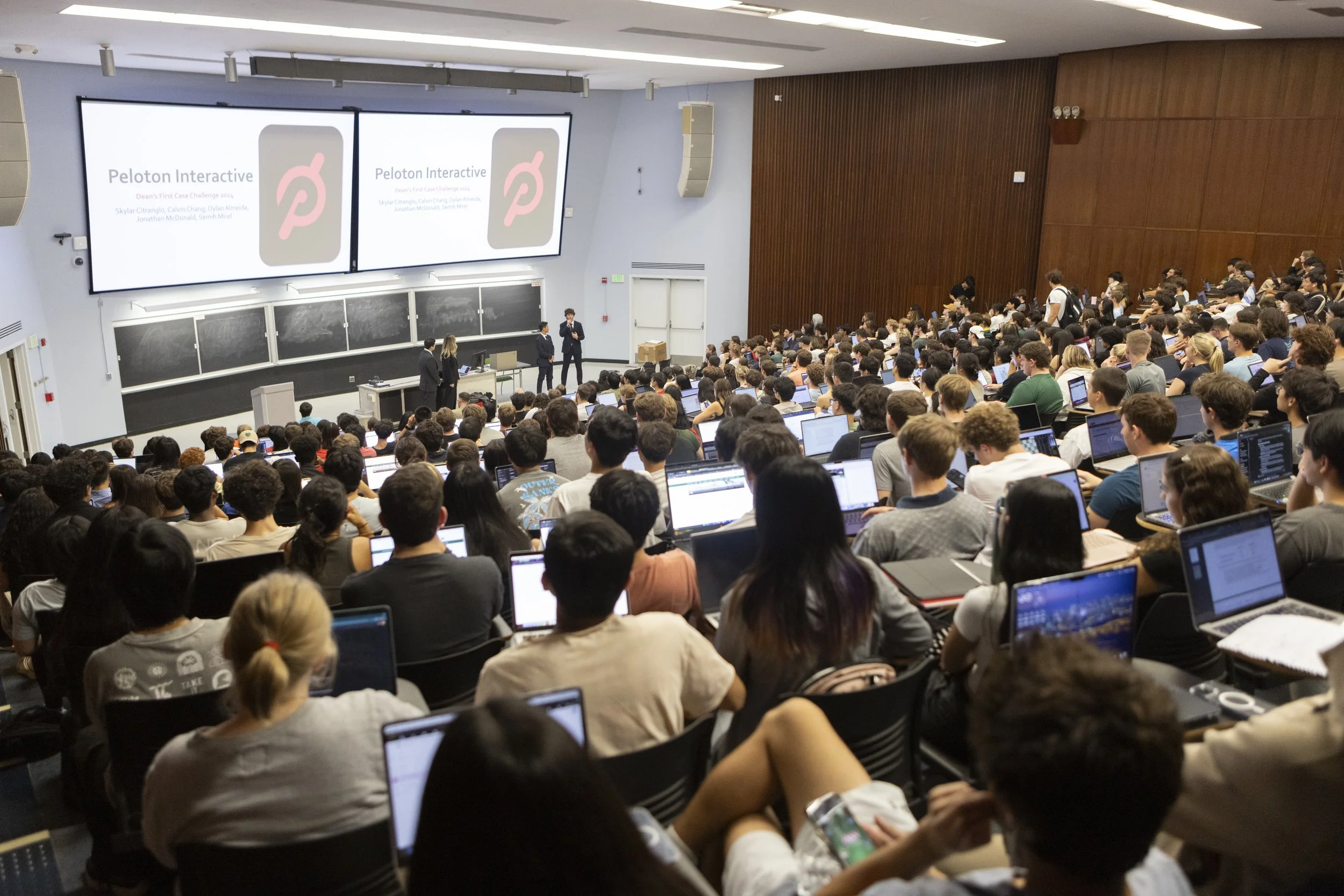
Storytelling drives how consultants explain the reasoning behind a recommendation. Case competitions and the on-campus speaking center both build this.
-
Time management and organization matter on every project. Peer success coaches on campus offer free coaching on this.
-
Understanding a client's perspective is what makes a recommendation actually land, rather than just being technically correct.
Soft Skills
How MCG Prepares Students for ConsultinG
The Management Consulting Group equips students with the tools and experience needed to succeed in consulting. Through workshops, case competitions, and real-world project simulations, members learn how to approach business problems, build structured solutions, and present effectively.
We emphasize both technical skill development and professional growth, preparing students to compete for top consulting opportunities out of Binghamton University.